What Will Happen to Interest Rates in 2026?
Interest rates are unlikely to fall aggressively in early 2026, but cuts are back on the table after Q1.
The Reserve Bank of Australia is balancing two competing pressures:
- Inflation control
- Employment stability
Unless Australia enters a full recession marked by rising unemployment, expect modest, gradual rate cuts rather than emergency-level easing.
Investor takeaway
- No sharp drops = no sudden price spikes
- A more stable rate environment supports steady, sustainable growth
- Borrowing conditions should slowly improve, favouring prepared buyers
If rates fall slowly → borrowing capacity improves gradually → competition increases in quality markets, not everywhere.
Will Australian Property Prices Rise or Fall in 2026?
Nationally, Australian property prices are expected to rise by around 7–10% in 2026, with meaningful variation between markets.
Despite ongoing talk of a property crash or long-cycle correction, there is no data pointing to a nationwide downturn in the next 12 months. Structural undersupply, population growth, and constrained construction pipelines remain dominant forces.
The reality investors need to accept
- Australia still does not build enough homes
- Demand continues to outpace supply
- Corrections require forced selling — and that pressure simply isn’t widespread
If supply remains constrained → prices don’t need rate cuts to rise → growth continues unevenly.
Which Property Markets Are Likely to Perform Best in 2026?
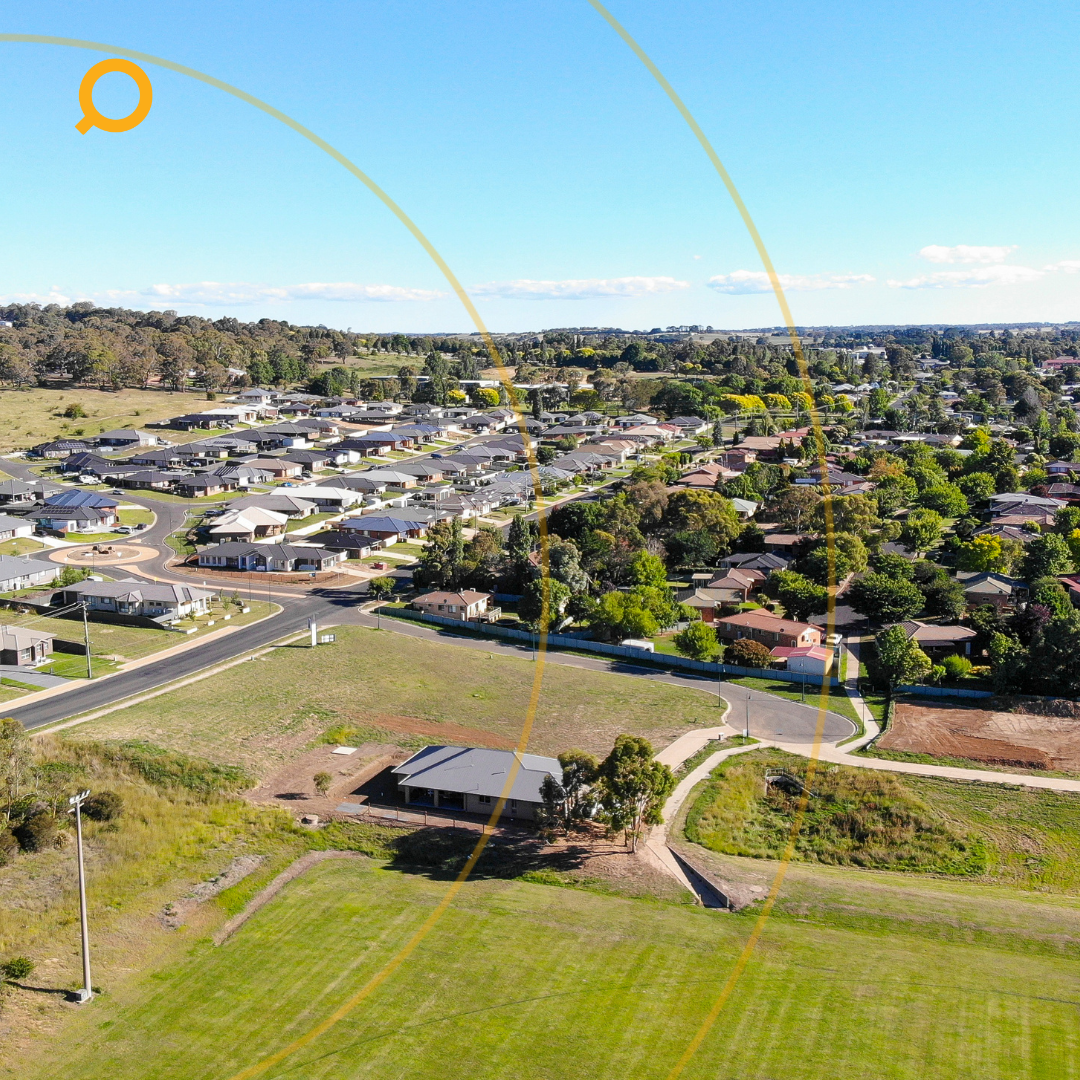
Regional Australian property markets are positioned to outperform many metro markets in 2026 due to a combination of relative affordability, stronger rental yields, lower new-housing supply, and sustained population shifts away from capital cities. While metro markets face higher entry prices and tighter borrowing constraints, regional areas continue to attract both owner-occupiers and investors, creating deeper demand without a matching increase in supply.
As a result, growth in 2026 is likely to be concentrated in select regional markets, rather than evenly spread across capital cities.
Perth: Still strong, but far more selective
Perth remains one of the strongest-performing markets in the country, although the easy gains are behind us. The opportunity now lies in:
- Scarcity-driven pockets
- Established dwellings, not speculative builds
- Areas with real owner-occupier demand
Expect continued growth, but with far less margin for error.
Regional Queensland: Infrastructure-led momentum
Regional Queensland continues to benefit from:
- Olympic-related infrastructure spending
- Population inflows
- Relative affordability compared to capitals
While some areas have already moved sharply, momentum remains intact, particularly where supply pipelines are limited.
Victoria: Value emerging in regional markets
While Melbourne’s inner and middle-ring suburbs face supply challenges and weaker sentiment, regional Victoria is attracting renewed investor interest.
Where pricing aligns with rents and fundamentals stack up, investors are finding value despite political uncertainty.
What About Sydney’s Property Market in 2026?
Sydney is likely to experience patchy performance rather than broad-based growth.
Key drivers:
- Extremely high entry prices
- Strong correlation to interest rate movements
- Buyer caution following recent volatility
Scenarios investors should consider
- If rates hold steady → modest, uneven growth
- If rates fall quickly → premium, supply-constrained suburbs outperform
- If unemployment rises → buyer confidence remains subdued
The Sydney property market is more sensitive to rate movements than regional markets because of its higher price points and debt exposure.
Rents & Vacancy Rates
Rental conditions remain tight heading into 2026.
While rental pressure may ease slightly beyond 2026, Australia’s housing shortage is structural, not cyclical.
What this means for property investors:
- Low vacancy rates = strong tenant demand
- Rising rents improve serviceability and borrowing capacity
- Strong rental demand supports price growth
- Tight rental markets reveal supply shortages
Why the Under-$1 Million Market Matters Most
The most competitive segment of the market in 2026 will be properties under $1 million.
Drivers include:
- First-home buyer schemes (5% deposit, Help to Buy)
- Investor demand for affordable yield
- Limited stock in this price bracket
In many regional and outer-metro markets, today’s sub-$1M properties are tomorrow’s entry barriers.
If demand concentrates below $1M → price caps get breached → affordability tightens further.
How Smart Investors Should Approach 2026
The biggest mistake investors can make in 2026 is waiting for clarity that never arrives.
At Search Property, our approach is grounded in:
- Supply and demand data
- Lending and policy awareness
- Market-specific strategy (not headlines)
If conditions soften → disciplined buyers gain leverage
If conditions tighten → prepared buyers still transact
That flexibility is what builds long-term portfolios.
Final Thoughts: What 2026 Means For Property Investors
2026 is shaping up to be a year where strategy and preparation beats speed. Prices are likely to move higher. Not everywhere. Not evenly. But decisively in markets where fundamentals are strongest.
If you’re relying on hope, timing, or headlines, 2026 will feel expensive.
If you’re guided by data, structure, and execution, 2026 presents real opportunity.
Ready to Build a Smarter Property Plan?
At Search Property, we help Australians create data-driven property investment strategies aligned with long-term wealth goals. Book a FREE investment assessment with Search Property. We’ll discuss your goals and position, and help you build a clear plan to move forward with confidence.
Disclaimer: Important Notice for Readers
By reading the content provided on this blog, you acknowledge and agree to the terms outlined in this disclaimer, binding yourself to its provisions unconditionally.
This blog presents information for informational, educational, and general non-advisory purposes only. It's important for you, the reader, to understand that the information provided does not take into account your specific personal, financial, or other circumstances. Consequently, we do not offer legal, financial, investment, or taxation advice, recommendations, or guidance. Before acting upon any information from this blog, you are strongly advised to consult with an independent professional, including legal, financial, taxation, accounting, or other relevant advisors, to verify the information’s relevance to your particular situation.
The information is provided in good faith, derived from sources believed to be reliable. However, we do not guarantee the accuracy, completeness, or applicability of the information to your individual circumstances, needs, objectives, or financial situation. The information may be selective and has not been independently verified. Therefore, it should not be the sole basis for any decision-making.
We expressly disclaim any liability for errors, omissions, or inaccuracies in the information, as well as any direct or indirect losses, damages, or expenses that arise from relying on our content, regardless of the cause, including negligence or other factors. Your engagement with this blog is entirely at your own risk.
Please be aware, we do not hold an Australian Financial Services Licence as defined by section 9 of the Corporations Act 2001 (Cth), nor are we authorised to provide financial services, and we have not provided financial services to you.


.png)